


1. Home
  2. Sport
  3. Rules & schedules

Rules & schedules

Rules & Reasons, in one place.

Butheeb 2026 is run under the FEI Endurance Rules, 2026 edition, the FEI Veterinary Regulations and the schedule the FEI approves for the championship. What they mean on the day, and the rules that apply to every horse at Butheeb, are set out here. The documents themselves are in the library, in English and Arabic.

2026FEI Endurance Rules edition in force
64bpmMaximum heart rate at presentation
60secMaximum time for the vet inspection
EN · AREvery schedule and notice, both languages

The rulebook

What governs the championship

FEI Endurance Rules

The rules of the discipline: qualification, the vet gate, holds, crewing, classification and penalties. The edition effective 1 January 2026 applies.

On inside.fei.org →

FEI Veterinary Regulations

Horse passports, examinations on arrival, the Veterinary Commission and the treatment of horses at the event.

On inside.fei.org →

FEI General Regulations and anti-doping rules

The FEI's general regulations and its Equine Anti-Doping and Controlled Medication Regulations apply to every FEI event.

On inside.fei.org →

The approved schedule

The FEI-approved schedule for Butheeb 2026 sets the timetable, the officials, the course and the conditions of entry. It is published here and in the documents library once released.

Documents library →

On the day

What the rules mean at the gate

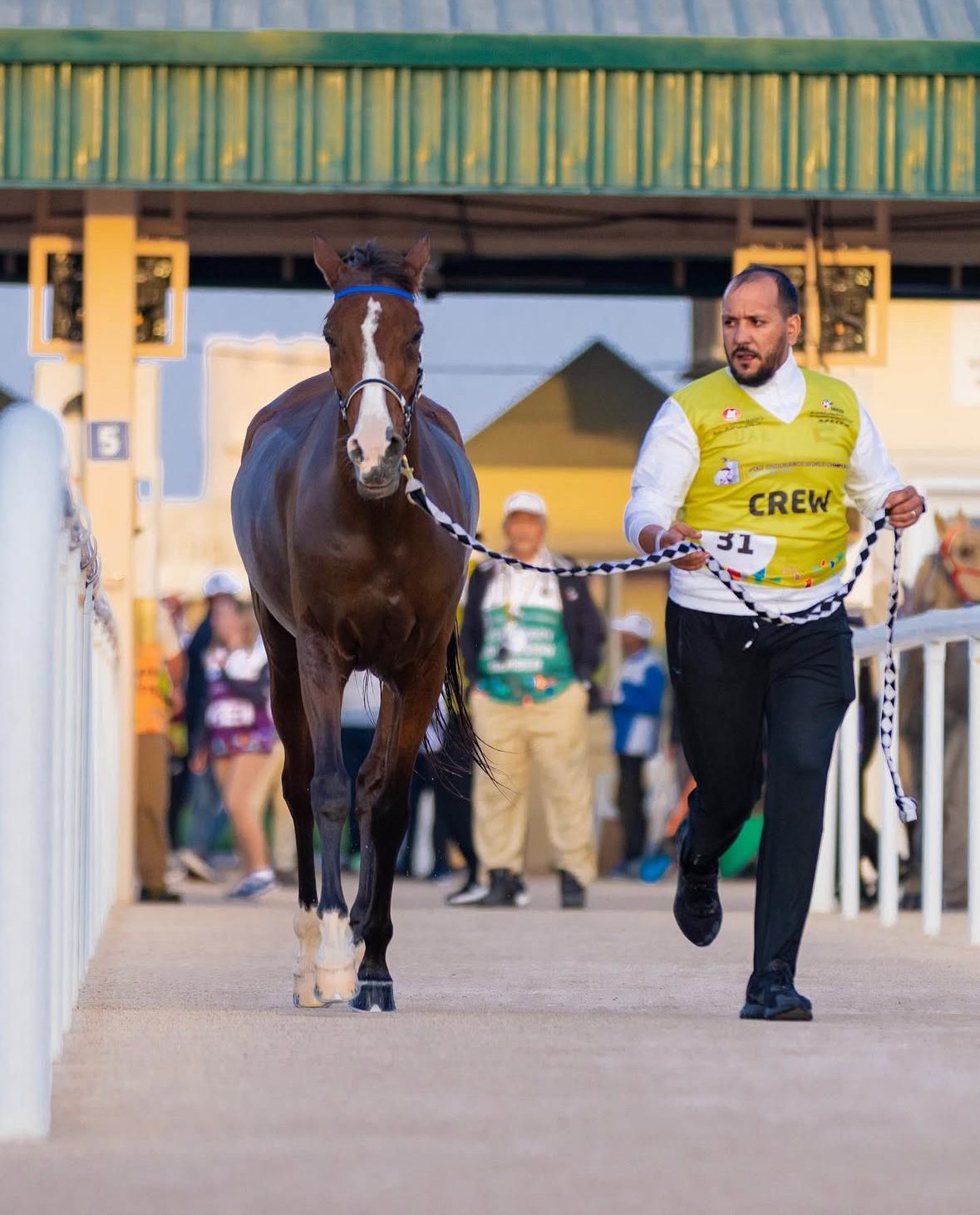
After every loop the horse is presented to the Veterinary Commission within 15 minutes of arrival, 20 minutes at the finish. Its heart rate, measured electronically, must be 64 beats per minute or below, and the inspection is completed within 60 seconds. A horse that needs a second heart-rate check is given a new vet-in time. The holds are 50 minutes after Loop 1, 40 minutes after Loop 2 and 50 minutes after Loops 3, 4 and 5, and every horse passes a recovery inspection in the last 15 minutes before it leaves.

Crewing is allowed only at the designated water points on the course and in the crewing area at the Village; crewing anywhere else means disqualification. Four crew members plus the athlete may attend a horse in the cooling area, and two crew members plus the chef d'équipe or team veterinarian in the inspection area. Deliberately delaying a horse's presentation is dealt with severely.

Two provisions new in the 2026 rules matter for the results: a combination's average speed is calculated over all the loops it completed, including a loop after which it failed to qualify; and a horse removed from the competition must still be presented for inspection, on pain of a 60-day penalty.

How the vet gates work, step by step →

15minTo present after a loop · 20 at the finish
50 · 40 · 50minHolds after Loop 1 · Loop 2 · Loops 3–5
4+1Crew plus athlete in the cooling area
2+1Crew plus chef d'équipe or team vet in inspection

Conditions of the ride

Who may start, and how the clock runs

Horses

Nine years and above. One horse per athlete.

Minimum weight

75 kg with saddle, checked at the weigh-in on the day before the ride.

Speed and time

Against the clock, with no maximum speed. Minimum speed 15 km/h. The Ground Jury President, with the Veterinary Commission, the FEI Veterinary Delegate and the Organising Committee, may set cut-off times for the later loops.

Vet gates

Six loops, five compulsory holds. Heart rate 64 bpm or below at every presentation. Vet-gate closing times are set and published at the general meeting.

Teams

Each nation may enter five riders; the best three count for the team classification. A nation with fewer than three riders is not ranked as a team.

Crewing

Crew assistance outside the official vet gate and the crew and water points is forbidden.

The horse and the tack

Rules for every horse at Butheeb

These conditions apply to every horse and rider on the field of play at Butheeb International Endurance Village.

  • Every horse is presented with its FEI passport and must be microchipped.
  • Horse temperatures are recorded twice a day in the FEI Horse App for the three days before arrival and throughout the event.
  • At the pre-ride inspection the horse must be sufficiently warmed up. A horse that will not permit examination, or is dangerous to the examiners, is eliminated.
  • Riders present photo identification at the weigh-in.
  • Hard riding helmets with a chin strap, and shoes with heels unless caged or equestrian stirrups are used. The horse's head must have freedom of movement.
  • No whips, spurs, draw or running reins, French reins or long reins, nor any rein that restricts the free movement of the head.
  • Tack in a safe condition and correctly fitted. Any shank on a bit no longer than 10 cm. No ear plugs. No metal chain nosebands; a leather or plastic noseband must allow two fingers under it at the front of the nose.
  • No dyes, including henna, on the horse at any time on the field of play, so that inspection and identification are not obstructed.

Documents library

The approved schedule, veterinary notices, accreditation and legal documents, in English and Arabic.

Open the library

Stabling and arrival

Passport and vaccination checks at the stable gate, biosecurity and settling in.

Stabling & arrival

Schedules

Dates set by the FEI

29 Sep

Qualification period closes

Horses and riders qualify between 29 September 2024 and 29 September 2026.

14 Oct

Nominated entries

National Federations submit nominated entries to the FEI.

17 Nov

Definite entries

Final teams and individuals confirmed.

14–20 Dec

Championship week

Arrivals, inspections, ceremonies and the 160 km ride on Saturday 19 December.

The full programme, day by day →

Approved FEI schedule

Published here once the FEI approves it

The daily timetable, the officials and the final course are part of the approved schedule. Until then, the Programme page carries the confirmed dates and the ride-day pattern.